
When AI Makes Mistakes: The Danger of Being Confidently Wrong

When we imagine AI screwing up, we usually picture something big: a completely made-up fact, a bizarre answer, or code that crashes the second you run it.
But sometimes the mistake is much smaller—and that’s exactly what makes it so easy to miss.
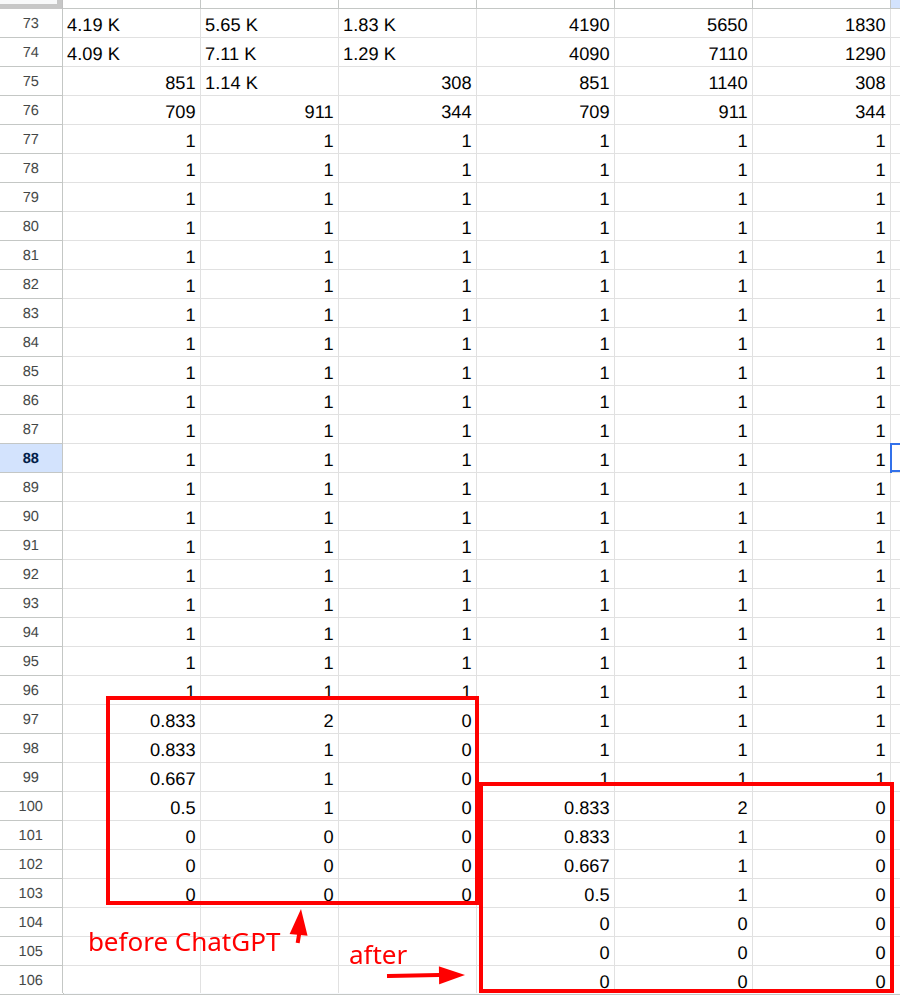
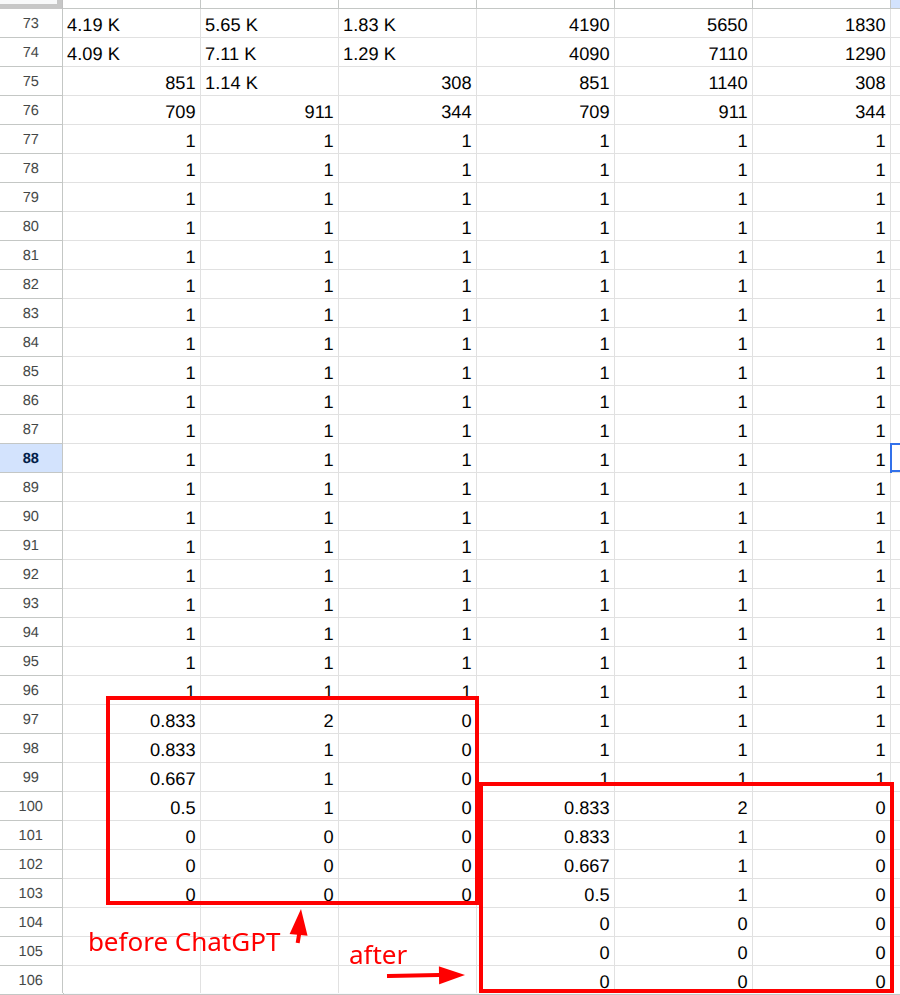
A while back, I gave an AI a dataset with a little over a hundred rows and asked it to normalize the numbers. The task was simple: turn values like 6.48 K into 6480, and leave ordinary numbers alone.
It did that perfectly.
Then I asked the obvious follow-up:
How many rows were there?
The AI answered, with total confidence: 100.
There were 103.
It had missed three rows entirely.
The Mistake Wasn’t Even the Scary Part
Counting to 103 isn’t hard. That’s exactly why it bothered me.
The AI didn’t fail because the task was too complex. It failed on something almost trivial. And it didn’t say, “I’m not sure.” It didn’t hedge. It just gave me the wrong number like it was a fact.
That’s the important thing to remember about modern AI: confidence and correctness are not the same thing.
An AI can sound precise, professional, and completely convincing—while being flat-out wrong.
Small Errors Can Matter
A three-row difference might not matter in a casual test.
But imagine that same quiet error showing up in a financial report, a business dashboard, or a research dataset with thousands of records.
A small mistake becomes a big problem when nobody notices it.
The real danger isn’t always a dramatic hallucination. Often, it’s something much more boring:
- A total that’s slightly off.
- A percentage that’s wrong.
- A row that got dropped.
- A date shifted by one day.
- A decimal point in the wrong place.
- A conclusion based on incomplete data.
These mistakes are especially dangerous because they look reasonable. Nothing about them screams “wrong.”
The Human Still Matters
When I told the AI the actual count was 103, it corrected itself right away.
That’s the ideal human-AI workflow, really: the AI does the heavy lifting, and the human checks the output.
This doesn’t mean we should stop trusting AI. It means we shouldn’t confuse assistance with authority.
AI is amazing at transforming data, summarizing information, generating ideas, writing code, and speeding up our work. But when accuracy actually matters, human verification is still essential.
Don’t Just Ask for an Answer
Maybe the biggest takeaway is that we need to change how we talk to AI.
Instead of only asking, “What’s the answer?” we should ask for reasoning too:
- “Can you verify that?”
- “Show me your step-by-step logic.”
- “Double-check the original data and make sure no rows were dropped.”
These extra steps won’t eliminate every mistake. But they make errors much easier to catch.
And sometimes the best verification tool is still the most obvious one: go look at the source data yourself.
AI Is a Tool, Not an Oracle
The goal isn’t to find an AI that never makes mistakes. That’s unrealistic.
The goal is to build workflows where mistakes are easy to detect and fix.
AI gives us speed, scale, and abilities that would have seemed like science fiction a few years ago. But humans still bring something AI can’t replace: skepticism.
So the next time an AI gives you a perfectly confident answer, don’t just ask yourself, “Does this sound right?”
Ask something better:
“How do I know it’s right?”
That one question might be the most important habit of the AI era.