
The New AI Leaderboard: Astra, Fable, Gemini 3.8 and the Collapse of the "One Best Model"

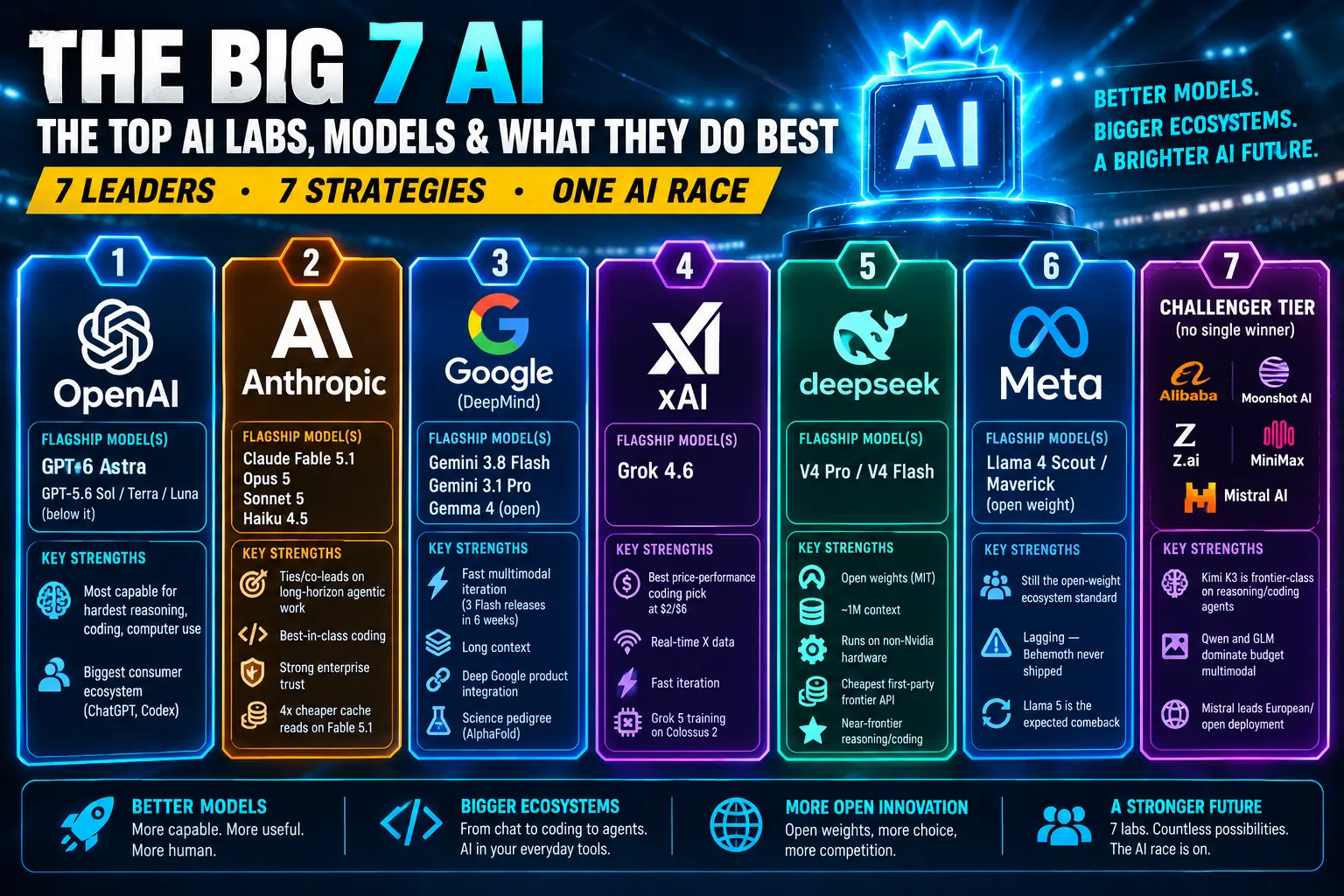
September 2026 — If you haven't checked the AI model leaderboard in a few weeks, it's out of date. The first week of September alone brought three major releases: Anthropic's Claude Fable 5.1 on September 1, Google's Gemini 3.8 Flash on September 2, and OpenAI's GPT-6 Astra on September 3 — the first model to top both the Artificial Analysis Intelligence Index and GDPval on the same day it shipped.
But the bigger story isn't which lab is "winning." It's that the question itself has stopped making sense.
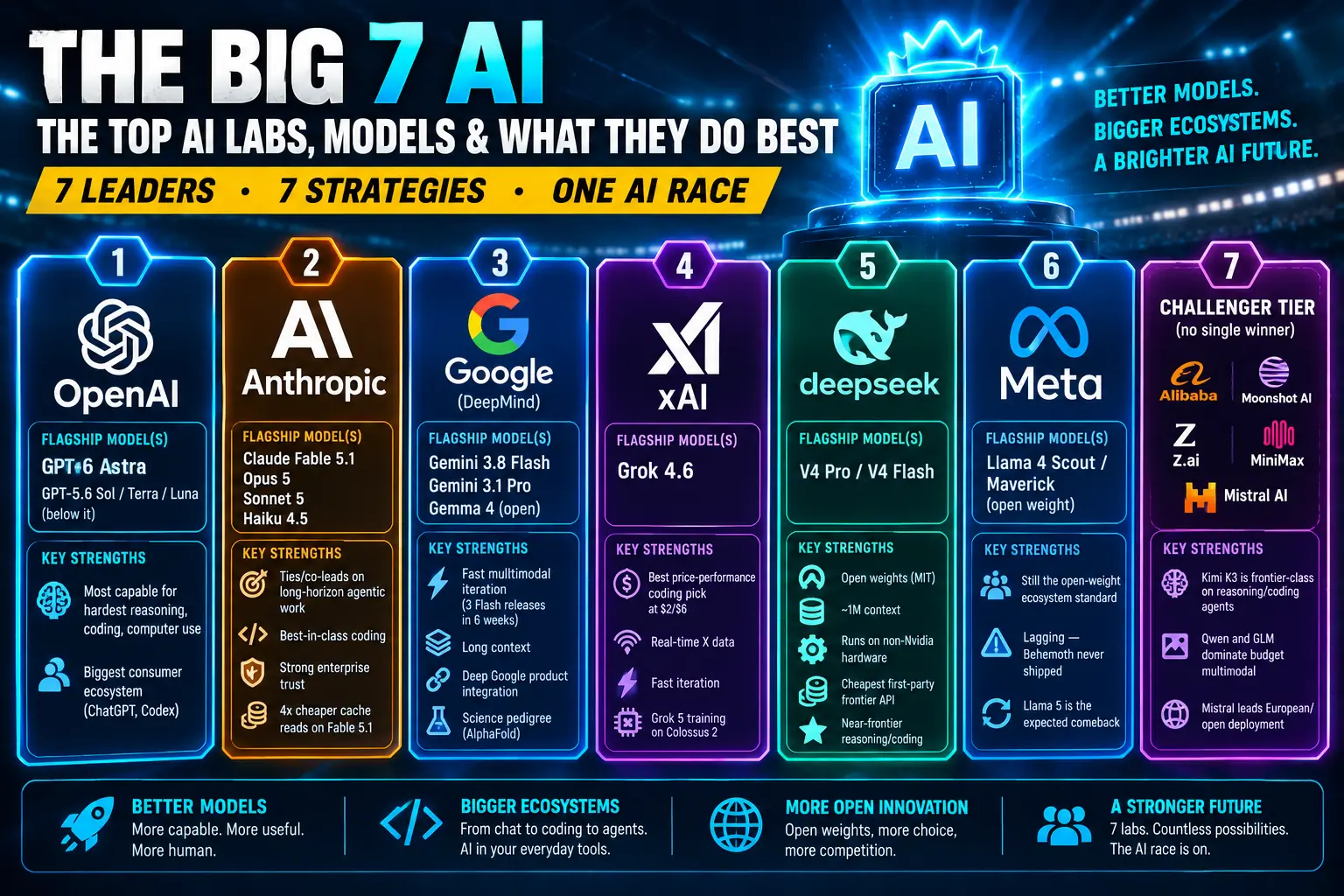
The top tier: OpenAI and Anthropic pull ahead on hard problems
At the frontier, two models now dominate the hardest work. GPT-6 Astra leads on reasoning, coding, and computer-use tasks — the kind of long-horizon agentic work where earlier models plateaued. Claude Fable 5.1, released two days earlier, is its closest competitor, with stronger long-context handling and a pricing tweak that matters for production workloads: cache reads are roughly 4x cheaper on Opus 5 and Fable 5.1, making Claude agents dramatically less expensive to run at scale.
Below them, Anthropic's Sonnet 5 has quietly become the industry's daily driver — the default pick for coding and enterprise agents where the full flagship's price isn't justified. OpenAI's older GPT-5.6 line (Sol, Terra, Luna) now serves as the value tier.
Google iterates fastest; xAI undercuts everyone
Google's headline isn't a single flagship — it's velocity. Three Gemini Flash releases in roughly six weeks (3.5 in late July, 3.6 on August 12, 3.8 on September 2) show a release cadence no competitor matches. Gemini 3.1 Pro remains the reasoning tier while its successor is still cooking.
xAI's Grok 4.6 (August 12) has become the surprise price-performance pick of the cycle: frontier-adjacent coding performance at $2/$6 per million tokens, with real-time X data as a genuine differentiator rather than a gimmick. Grok 5 is already training on the Colossus 2 cluster.
The open-weight floor keeps collapsing
The most strategically important development is at the bottom of the price curve. DeepSeek V4 (Pro and Flash, open-weight under MIT, ~1M context) runs on non-Nvidia hardware — a quiet but significant blow to CUDA's moat. China's challenger labs have moved from "cheap knockoffs" to the price-setting tier: Z.ai's GLM-5.3 Flash at $0.15 per million tokens on OpenRouter is the cheapest credible model available, Moonshot's Kimi K3 is frontier-class on reasoning and coding agents, and Alibaba's Qwen 3.8 and MiniMax's M3 anchor the budget multimodal segment.
Meta, notably, has fallen out of the frontier conversation. Llama 4 Scout and Maverick remain the open-weight ecosystem standard, but the long-promised Behemoth never shipped, and the company's credibility now rests on Llama 5, expected in the second half of 2026.
What this means in practice
For builders, the playbook has inverted. A year ago, you picked one model and routed everything through it. Today:
- Hard, long-horizon agentic work → GPT-6 Astra or Claude Fable 5.1
- Daily coding and enterprise agents → Claude Sonnet 5
- Cost-sensitive, high-volume tasks → Gemini 3.8 Flash or Grok 4.6
- On-prem, compliance-sensitive, or non-Nvidia deployments → DeepSeek V4, GLM-5.3, Kimi K3, Qwen 3.8
GPT-6 Astra's debut marks the end of the benchmark-prep arms race — but it also marks the moment the frontier became a portfolio decision rather than a leaderboard position. The labs are no longer competing for a single crown. They're competing for which slot you give them in your routing table.